

Endometriosis - When your period pain keeps you from your life.
What is it?
Endometriosis is a condition in which tissue that is like the tissue that lines your uterus (the endometrium), grows outside your uterus. It most commonly involves the ovaries, fallopian tubes and the tissues lining your pelvis. It may also spread beyond pelvic organs although that is less common.
What happens?
The endometrial-like tissue acts like endometrial tissue does. It thickens, breaks down and bleeds with each menstrual cycle. Except it has no way to exit the body and becomes trapped. On the ovaries endometrial cysts called endometriomas may form. Each month when the tissue is stimulated it can create inflammation and result in scar tissue and adhesion development.
What does it feel like?
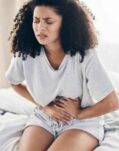
It f@cking hurts. When most women who have endometriosis learn about it, they know as soon as they hear about the symptoms. It has been brushed off for years in many cases as “bad cramps”. Its not “just” bad cramps. It can cause very severe pain especially during your period.
Who has it?
- It affects 1 in 10 women or reproductive age
- Can occur in up to half (50%) of women experiencing infertility
- It is the culprit in approximately half of women experiencing pelvic pain
(Stats Source: SOGC.org)
What are the symptoms of endometriosis?
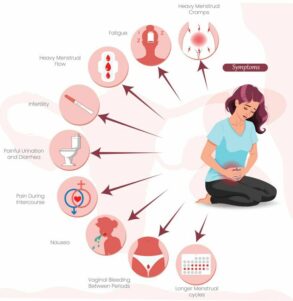
- Painful periods – pelvic and/or abdominal pain and cramping before and during your period.
- Pain with intercourse – may be during or after sex
- Pain with bowel movements or urination during your period
- Heavy bleeding or bleeding between periods
- Infertility
- Fatigue
- Digestive changes – diarrhea, constipation, bloating or nausea during your period
What causes of Endometriosis
The short answer is we aren’t totally sure and that is likely because there are multiple causes or factors that lead to the development of Endometriosis. For many years it was thought that retrograde menstruation (period blood and tissue heads out the fallopian tubes the wrong way into the pelvis) was the cause, but we know now that’s not the full story. We know genetics, epigenetics, past infections, immune dysfunction, and stem cells all can play a roll.
How its diagnosed
Endometriosis can be diagnosed clinically based on your symptoms and clinical history. The gold standard is a laparoscopy which is a surgery in which they put a camera into your abdomen to look for endometrial lesions. If endometriosis is found during this procedure the doctor may cauterize (burn off) or excise (remove) the lesions.
Should I get checked for it?
If you have periods that interfere with your ability to live your life, then you should have it investigated. If you miss school or work due to period pain, then ask your doctor about it. In many cases you will be offered the birth control to stop the ebb and flow of your cycle. If you are trying to conceive this is obviously not a helpful solution and I do recommend asking for a referral to a gynecologist to explore if a laparoscopy my be indicated.
How it affects your fertility and what does a naturopathic approach look like?
Stay tuned for part 2 of this article……..
Dr. Nicole Shortt, ND
Dr Nicole Shortt, BSc, ND is a Naturopathic Physician who is passionate about naturopathic medicine and the choices it gives people in health care.
Read Bio